
Training for beginners in cross-functional fitness is an opportunity to understand where it’s best to start, how to properly build muscle or lose weight without harm to your health. It’s necessary to initially plan your future training programme competently, paying attention to several important points. After all, cross-functional fitness represents high-intensity training that combines different elements: gymnastics, weightlifting, cardio loads, and functional movements. In this review, you can learn more about the features of cross-functional fitness for beginners and useful recommendations.
Features of Cross-Functional Fitness for Beginning Athletes
In cross-functional fitness, all exercises are performed in circuits or in a special “WOD” format (Workout of the Day).
Features for beginners:
- Adaptation to a specific level of athlete preparation. All training is scaled to the athlete’s skills and abilities: for example, weight is reduced, number of repetitions decreased, simpler exercises are used.
- Choice of short but sufficiently intense sessions. The duration of standard training is 45-60 minutes, and a mandatory condition is warm-up, WOD, and following specific technique.
- Training variety. Every day the athlete expects a new programme aimed at developing strength, endurance, agility, and movement coordination.
Such features will help beginning athletes “immerse themselves” in cross-functional fitness and understand its basic principles.
Example Training for Beginners
For each beginner, an individual cross-functional fitness training programme will be developed, which depends on their individual goals and initial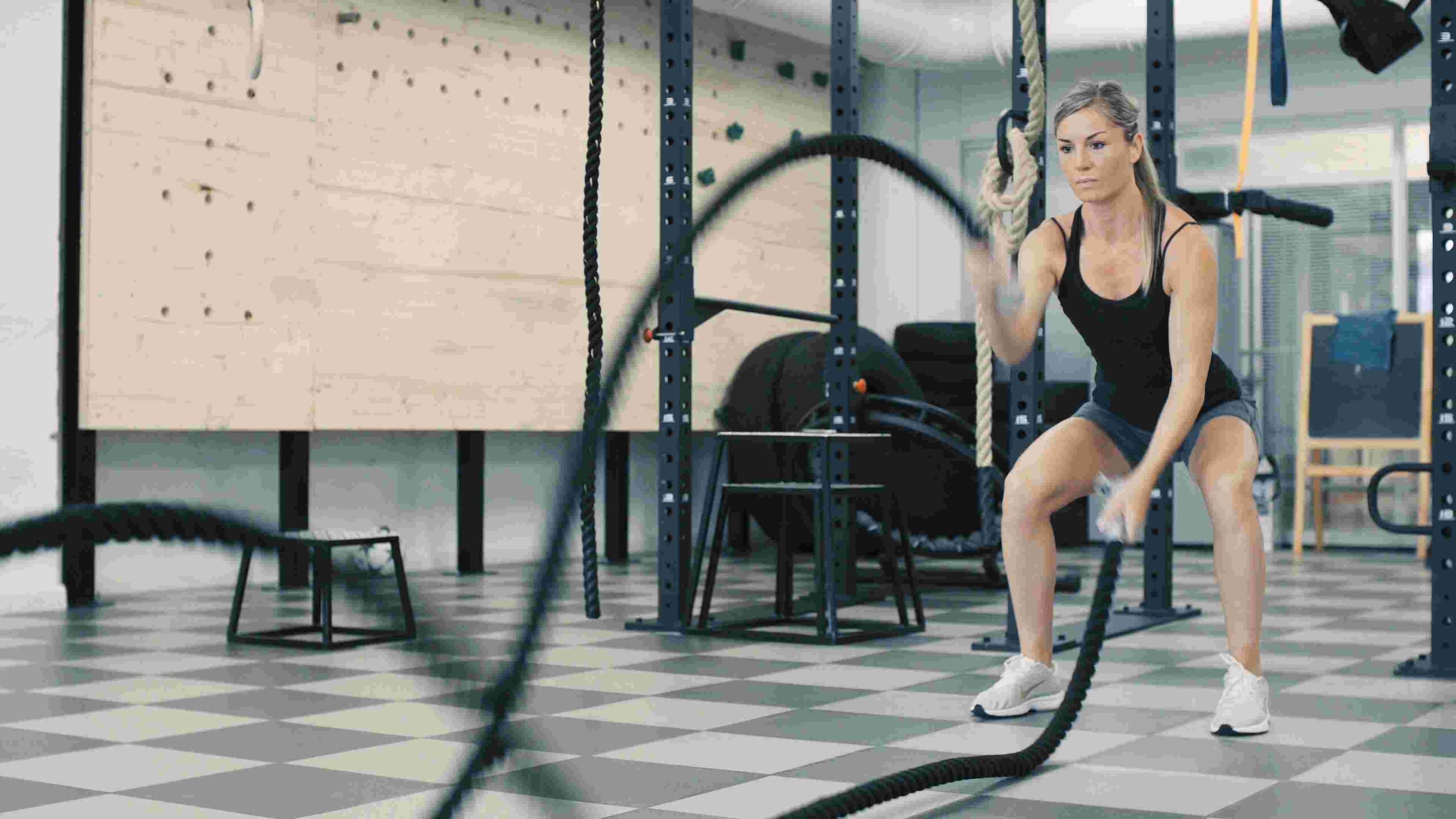 physical preparation.
As an example, we can consider the following effective training that consists of three stages:
- Warm-up – lasts 5-10 minutes. The athlete can choose light running or jump rope, as well as perform arm swings, squats, stretching to warm up all body muscles.
- Main block – this is WOD, performed for 10-15 minutes. The format is quite simple and clear: you need to complete 3 rounds for time (sometimes AMRAP is chosen, when you need to do the maximum number of rounds in 15 minutes). The main block for beginners often includes the following exercises: 10 bodyweight squats; 10 push-ups (from floor or from knees); 10 pull-ups (you can use a resistance band); 200m run/row.
- Cool-down – performed for 5 minutes. After completing training, the athlete should perform stretching of back, arms, and legs.
This is basic training that can differ in duration, list, and order of performing all exercises.
Useful Tips for Beginners in Cross-Functional Fitness
Starting your own path in cross-functional fitness, every athlete should remember several basic and useful recommendations that will help them better understand future training.
Main tips:
- Find a certified gym – this should be a club with good rating, qualified trainers who will help master technique.
- Don’t chase time or work with maximum weight. The main thing is technique. It’s necessary to initially learn to correctly perform each exercise in the programme, and only then experiment with time and choose greater weight.
- Always monitor your recovery – rest and proper nutrition are necessary for getting energy and restoring spent strength.
- Adapt each exercise to your capabilities. The programme should be safe and at the same time effective.
Additionally, beginners must be consistent, which means you need to set a main goal for the start: for example, 2-3 training sessions per week. Gradually, you can add load while controlling your physical and mental state.
Common Beginner Misconceptions About Cross-Functional Fitness
Many beginners don’t dare to engage in cross-functional fitness due to many misconceptions and erroneous opinions about this direction.
Let’s consider the most common misconceptions:
- “Intensive exercises lead to quick burnout”. This can be called true if the athlete overdoes it and ignores the recommended programme considering individual capabilities. But when applying a competent programme under trainer supervision, there will always be progress – smooth and safe for the athlete’s health.
- “Cross-functional fitness is exclusively for physically prepared athletes”. This is an erroneous opinion, because cross-functional fitness was initially invented to scale future loads for each athlete. Therefore, anyone can engage in cross-functional fitness: from housewives and office workers to more experienced athletes. The main thing to remember is that you need to choose load according to your strength and endurance.
- “Cross-functional fitness is heavy barbells and constant competitions”. Another erroneous opinion, because cross-functional fitness has quite a lot of training where you need to work with your own weight. Also, there are cardio loads and functional movements. Over time, barbells are added, but only on condition that the athlete is really ready for them.
Thanks to debunking myths, more and more curious beginners are joining cross-functional fitness and the sports movement worldwide.
What Does Cross-Functional Fitness Develop?
Cross-functional fitness is often called a universal method capable of simultaneously developing 10 useful physical qualities.
This list includes:
- Cardiovascular endurance
- Muscular endurance
- Strength
- Flexibility
- Power
- Accuracy
- Balance
- Agility
- Movement coordination
- Speed
For this reason, cross-functional fitness remains in demand among those who want to always stay “in shape”.
Basic Equipment in Cross-Functional Fitness
During training, athletes can use different types of equipment. But most often this list includes:
- Kettlebells
- Medicine balls for throws
- Plyo boxes for jumps and other exercises
- Pull-up bars
- Jump ropes for double unders
- Rowing machines
- Barbells (it’s recommended to start with minimum weight, which can be gradually increased)
However, the amount of equipment will increase gradually – as professionalism, endurance, and physical preparation of the athlete improve.
Useful Nutrition Recommendations for Cross-Functional Fitness Beginners
To achieve maximum results, it’s not enough to follow a training programme; you also need to take care of your nutrition. First of all, you should maintain optimal balance of proteins, carbohydrates, and fats in your daily diet. However, you shouldn’t starve or choose strict diets, because cross-functional fitness requires maximum strength, endurance, and constant renewal of spent energy.
Quality sleep, which should last about 7-9 hours, also affects strength recovery.
Between training sessions, beginners can take rest: for example, 1 day of rest between sessions is enough. For starting, a 3/7 programme is considered ideal, when 3 training sessions per week are planned.
How to Avoid Overtraining in Cross-Functional Fitness?
Overtraining in cross-functional fitness is a serious risk for every beginner without special preparation who wants to get “everything at once”. Such motivation leads to chronic fatigue, decreased strength and endurance, poor sleep, sharp mood swings, and decreased immunity.
To avoid such consequences, you should remember several important rules:
- Control the frequency of your training. For a beginner, 2-3 sessions per week with mandatory rest days for recovery are sufficient.
- Don’t ignore warm-up and cool-down. For example, warm-up helps reduce the risk of injuries, helping prepare the entire body for upcoming loads, and cool-down promotes recovery after heavy WODs.
- Don’t chase records, focusing on professionals in cross-functional fitness. All loads should be increased gradually, and don’t forget that technique comes first. Despite the fact that cross-functional fitness is considered competitive, it’s not necessary to be first without having the initial level of preparation, strength, endurance, and motivation like professional athletes.
- Follow proper nutrition. Carbohydrates allow replenishing missing energy, and proteins help muscles recover much faster.
You should always listen to your own body, which will “suggest” how to train correctly. If a feeling of “being broken down” appears, it’s best to skip training. Additionally, you should alternate load days: for example, heavy days – light days – cardio – stretching – yoga. As a result, you’ll avoid getting stuck on one exercise and provide variety for your body.